
Find Expert Palatine Furnace Repair for All System Types
- airblueinc2024
- Feb 17
- 3 min read
Cold weather can place steady pressure on heating equipment. So, you may watch performance more closely during winter months. Palatine furnace repair refers to checking, fixing, or adjusting heating systems when comfort levels drop or faults appear. Odd sounds, weak airflow, or uneven warmth across rooms appear common. Because small signs often appear early, paying attention helps prevent larger trouble later. In simple terms, the focus keyword explains service steps that restore heating function.
You also need clear guidance before seeking support or planning checks. Therefore, this post explains system types, common concerns, care habits, and response options.
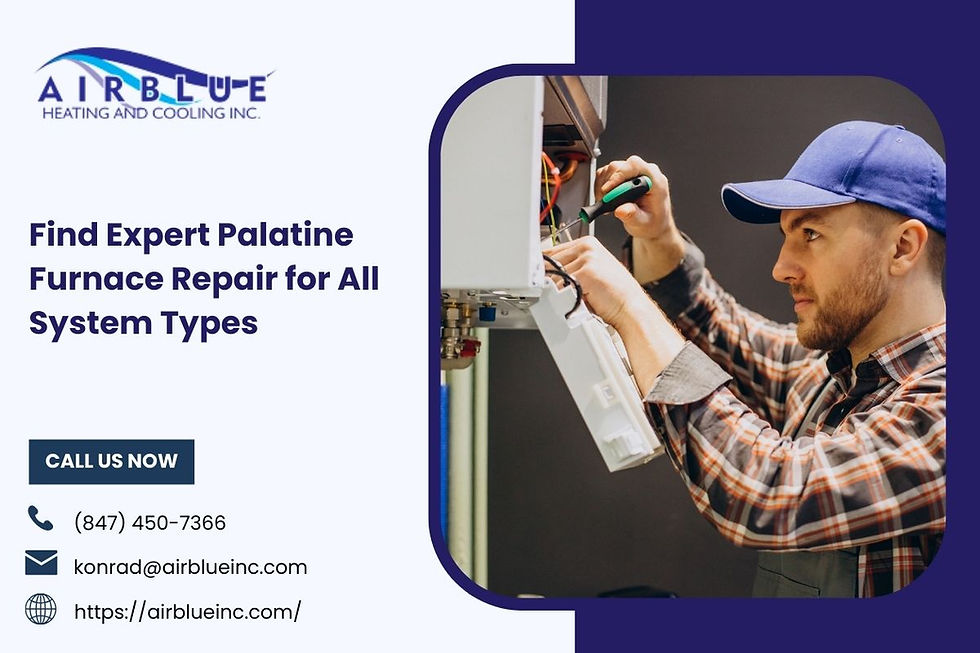
Knowing System Needs and Palatine furnace repair
Heating systems differ in design and upkeep needs, so awareness supports timely action. Because changes in output signal faults, knowing the basics helps you judge next steps.
Types of Systems Covered by Palatine furnace repair
Homes often rely on several furnace styles. However, each type shows faults in unique ways.
Gas units that heat air through burners
Electric systems using heating coils
Oil-based setups using stored fuel
Hybrid options linked with heat pumps
Each may need checks when output shifts. As a result, Palatine furnace repair work focuses on restoring steady heat and airflow.
Signs That Attention Is Needed
Performance changes often appear gradually. Because early response limits stress on parts, watch for signals.
Loud or repeated start sounds
Airflow that weakens over time
Rooms heating at different rates
Higher energy use without a clear reason
Noticing patterns helps guide contact with Palatine furnace repair near me searches when needed.
Routine Care That Supports Heating Stability
Simple habits extend system life. Also, they reduce sudden service calls.
Inspection and Cleaning Steps
Basic upkeep improves comfort and airflow. Because dust buildup affects movement, routine checks matter.
Replace filters every few months
Clear vents and returns
Keep storage away from units
Listen for tone changes
Following these steps helps maintain output before requesting Palatine furnace repair visits.
Working With HVAC Palatine Professionals
Regular assessments offer outside review. However, trained staff check wiring, pressure, and airflow.
Such sessions often include:
Measuring heat output
Checking ignition or coils
Confirming safe venting
Reviewing thermostat links
Professional insight supports steady heating through changing seasons.
Planning Responses to Sudden Heating Problems
Unexpected faults may occur even with care. Therefore, a calm response keeps action steady.
Preparing for Urgent Situations
Quick planning reduces confusion. Because cold conditions affect comfort fast, steps should stay simple.
Keep contact details ready
Note model and service dates
Record changes in sound or heat
Ask about an instant ac quote option
Prepared details speed communication with Palatine furnace repair providers when issues arise.
Comparing Repair and Replacement
Some faults resolve easily, yet older systems may need broader review. However, balance depends on cost and age.
Consider:
System age beyond expected range
Frequent repair needs
Rising energy costs
Limited parts supply
Evaluation supports careful decisions instead of rushed changes.
Long-Term Awareness for Heating Reliability
Stable comfort depends on consistent attention. Also, routine checks guide long-term planning.
Monitoring Performance Over Time
Seasonal shifts affect system strain. Because tracking output patterns shows trends, simple notes help.
Mark service dates
Observe monthly costs
Record comfort levels
Review airflow strength
These records guide discussions with Palatine furnace repair teams during visits.
Learning From Service Feedback
Technicians often share practical insight. However, asking questions improves understanding.
Topics worth raising include:
Safe thermostat settings
Filter change timing
Warning signs to watch
Seasonal start checks
Clear communication supports ongoing heating stability across colder periods.
Monitoring Progress Regularly
Reviewing Performance
Track outcomes against expectations at scheduled intervals. This habit highlights gaps early and keeps long-term direction steady. Small adjustments based on observation prevent larger disruptions later and strengthen confidence in decision-making.
Updating Priorities
Conditions shift over time, so revise plans to reflect current realities. Align resources with updated goals and remove outdated assumptions. This flexible mindset supports resilience and maintains relevance while ensuring that strategies continue serving practical needs without unnecessary complexity.
FAQs About Palatine furnace repair
What does Palatine furnace repair include?
Service often covers inspection, cleaning, and part fixes. However, exact steps depend on system type and condition.
How often should heating systems be checked?
An annual review before winter is common. Because use patterns differ, some homes benefit from added midseason checks.
When should I seek Palatine furnace repair near me support?
Contact support when airflow weakens or sounds change. Early action prevents larger faults and supports steady comfort.
Conclusion: Reviewing Palatine furnace repair Awareness
Heating care involves awareness, observation, and steady upkeep. Because systems age and use varies, reviews remain useful. Palatine furnace repair knowledge supports planning, tracking system health, and working with service providers. Careful attention encourages safe and steady comfort indoors.
Ultimately, steady evaluation and flexible planning strengthen resilience, helping individuals adapt confidently while maintaining clarity, balance, and practical long-term direction!


Comments