
Preventive Maintenance Tips to Avoid Des Plaines Commercial Boiler Repair
Regular maintenance can prevent buildings from suddenly collapsing and keep them warm in winter. Des Plaines commercial boiler repair is the professional name for working on a commercial heating system that malfunctions, begins running inefficiently or just stops working completely. For those who manage properties, routine inspections are also an opportunity to detect minor problems before they escalate. Start with an evaluation of the age of the boiler, the operating history, water quality, and service history. Also, employees should be informed of what warning indicators demand immediate action. A simple maintenance program may consist of inspection, cleaning, pressure testing and safety testing.
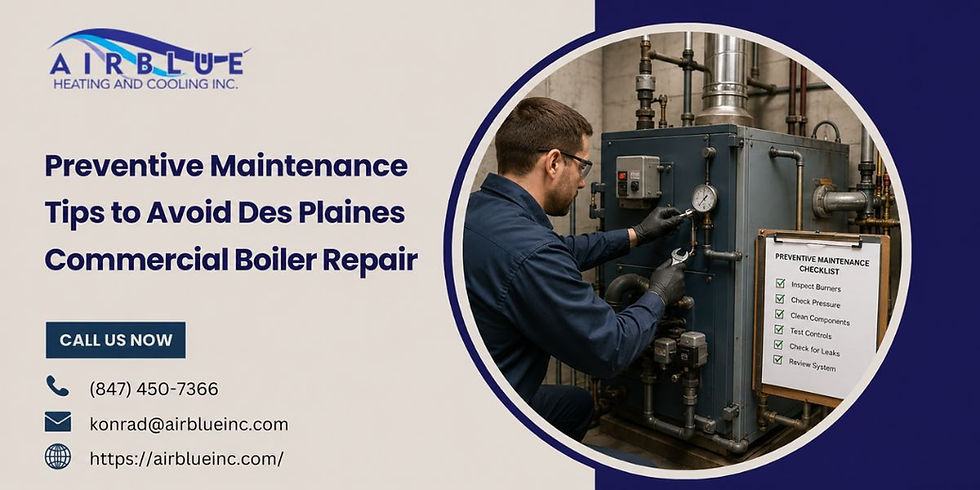
This guide details practical measures to reduce the risk of needing Des Plaines commercial boiler repair. It also describes normal controls, early warning signs, seasonal warm-up procedures, and questions to consider when performing service calls.
Why Regular Boiler Maintenance Matters
Commercial boilers are subject to tough operating environments. Long operating hours, frequent heating cycles, and poor water quality can stress critical components.
Reducing the Risk of Sudden Failures
An ignored heating system can accumulate minor troubles that develop over time. For example, a minor leak can affect nearby parts if left untreated.
Regular checks can help identify:
Unusual sounds
Pressure changes
Water leaks
Uneven heating
Faulty controls
Corrosion
Higher fuel use
Early care doesn't ensure a system will never fail. But it can allow you to spot trouble areas before they result in lockouts.
Commercial properties also experience varying heating requirements. Offices, shops, schools and factories all have different requirements. Thus, the maintenance should be adapted to the usage and working hours of the building.
Key Boiler Checks to Include in a Maintenance Plan
An effective maintenance programme should focus on key components that influence security and reliability. Work that is technical in nature or that requires specialized tooling should be performed by qualified personnel.
Inspecting the Boiler and Controls
It can be easy to spot signs of wear, rust, moisture leaks or damaged wrap-from a mile away. As with system performance, control panels should be inspected because incorrect settings can influence system performance.
Pressure levels deserve regular review as well. Readings outside the normal operating range can signal a problem that needs further testing.
Cleaning also matters. Dust, dirt, and buildup can affect burners, vents, and other parts. As a result, keeping these areas clean can support proper operation.
Checking Water Quality
Water quality is important for the operation of the boiler. In the hard water system, mineral deposits can form. Corrosion can be caused by poor water treatment.
A maintenance program should consider:
Water hardness
Chemical balance
Sediment buildup
Corrosion signs
Treatment needs
Water testing schedules depend on the equipment and site conditions. Therefore, follow the manufacturer's guidance and recommendations from qualified service staff.
Seasonal Steps That Can Help Prevent Repairs
Seasonal preparation gives building managers a chance to review equipment before heavy heating demand begins. Taking action before winter can help reduce service disruptions.
Preparing Before Cold Weather
A pre-season inspection should check the boiler, controls, pumps, valves, and related equipment. Venting systems also deserve attention because blocked or damaged vents can create serious safety concerns.
Testing should confirm that safety controls work correctly. Furthermore, technicians can review operating pressure and temperature settings.
Buildings that rely on several heating systems should also check how each unit performs. A problem with one boiler can place extra demand on the remaining equipment.
Reviewing Service Records
Service records can show patterns that are easy to miss during a single inspection.
Repeated leaks, pressure problems, or control faults deserve closer review.
Keep records of:
Inspection dates
Repairs completed
Parts replaced
Water treatment results
Safety tests
Technician findings
Good records also help when planning future work. For example, repeated problems could suggest that a component needs closer assessment.
Warning Signs That Need Prompt Attention
Some signs should not be ignored. Acting quickly can help prevent a minor fault from affecting other parts of the system.
Signs Linked to Des Plaines Commercial Boiler Repair
A commercial property should pay attention to changes in normal boiler operation.
Strange noises, unusual smells, or visible leaks can signal trouble.
Other warning signs include:
Frequent system shutdowns
Rising energy use
Slow heating
Uneven indoor temperatures
Pressure that changes without reason
Water around the equipment
Repeated control errors
When these issues appear, avoid repeated resets without finding the cause. A qualified technician can inspect the equipment and determine what needs attention.
If a property uses other heating equipment, related service needs should also receive proper planning. For example, businesses considering an instant water heater quote should compare system needs, installation requirements, and expected usage.
Likewise, properties in nearby areas could require Northbrook commercial boiler repair when similar heating problems occur. However, service decisions should always depend on the specific equipment and building.
How to Build a Practical Maintenance Schedule
Preventive care works best when tasks follow a clear schedule. A written plan makes responsibilities easier to track and reduces the chance of missed checks.
Monthly and Seasonal Tasks
Building staff can perform simple visual checks, while qualified technicians handle technical inspections.
A basic schedule could include:
Monthly: Check for visible leaks, unusual sounds, and changes in pressure.
Seasonally: Review controls, vents, pumps, and safety systems before heavy heating use.
Annually: Arrange a full inspection and service based on manufacturer guidance.
The exact timing can differ by equipment type and operating conditions. Therefore, always follow the manufacturer's instructions and applicable safety rules.
FAQs
How frequently should a commercial boiler receive maintenance?
The schedule depends on the equipment, operating hours, and manufacturer instructions. A yearly professional inspection is common, while basic checks can happen more frequently.
Can regular maintenance prevent every boiler breakdown?
No. Wear, age, unexpected faults, and other factors can still cause failures. However, routine care can help identify some problems earlier.
Conclusion
Be aware that preventive maintenance can help to decrease surprise heating failures. Routine Boiler System Checks From inspections to water testing, cleaning, safety checks, and record keeping, it is possible to help commercial boiler systems to run a little better.
Moreover, early detection of leaks, pressure variations, noises and intermittent malfunctions can help hold on repairs. A clear schedule also helps property managers plan service work before heavy heating demand begins.
Ultimately, reducing the need for des plaines commercial boiler repair starts with consistent care. By following manufacturer guidance and using qualified technicians for technical work, you can address small concerns before they develop into larger system problems.


Comments